
This article is part of our series on digital sovereignty in Europe. We update it whenever the rules or the platforms change.
Last updated: November 2026, after Microsoft's October 2026 update on Data Guardian, external key management and the Sovereign Control Panel.
Sovereignty as a moving target
Digital sovereignty in the EU keeps moving. It shifts with every new EU law and national policy, and with the way the big cloud providers respond. It started as a debate about where data is stored. Today it is about who controls the systems, and whether regulators across the member states can enforce that control.
Europe Demands More than Data Residency
For many European organizations, and certainly for regulated ones, sovereignty now means more than data residency. They need the cloud to stay competitive. That same cloud raises hard questions about who controls the data, who can reach it and which law applies. Keeping data inside Europe used to feel like enough. Today it is only the start.
Microsoft completed the final phase of the EU Data Boundary in February 2025. In our previous article we described how that gave organizations confidence that their data would stay in Europe and remain subject to EU law. After years of uncertainty about cross-border data access, it was an important step towards restoring trust.
As we noted then, it left the bigger question open: how European institutions can run in the cloud under their own governance, without depending on foreign oversight.
Since we first published this article, EU regulation has kept maturing. The Digital Operational Resilience Act (DORA) is being implemented, the NIS2 Directive is read more broadly, and GDPR accountability is enforced more strictly. Together they raise the bar for operational transparency, access governance and supply chain control. For governments and regulated sectors, sovereignty is turning from a preference into something regulators expect.
More recently, EU requirements have moved towards control you can prove, over identity, over access and over how operations are run. Policy enforcement and auditability now belong in the design from the start.
Enforcement Signals from EU Institutions
The clearest signal so far came from the European Data Protection Supervisor (EDPS). In March 2024 the EDPS found that the European Commission’s own use of Microsoft 365 broke EU data protection rules, and it ordered corrective measures. What happened next shows what compliance takes in practice. The Commission and Microsoft tightened purpose limitation. They limited transfers outside the EEA to named countries on defined legal grounds. They also added binding contract instructions on subprocessors and disclosure requests. In July 2025 the EDPS confirmed the infringements had been remedied and closed the case. It then asked every other EU institution that uses Microsoft 365 to carry out a similar assessment. This was real enforcement, it ran its full course, and the list of fixes reads like a sovereignty architecture.
EU Operational Sovereignty
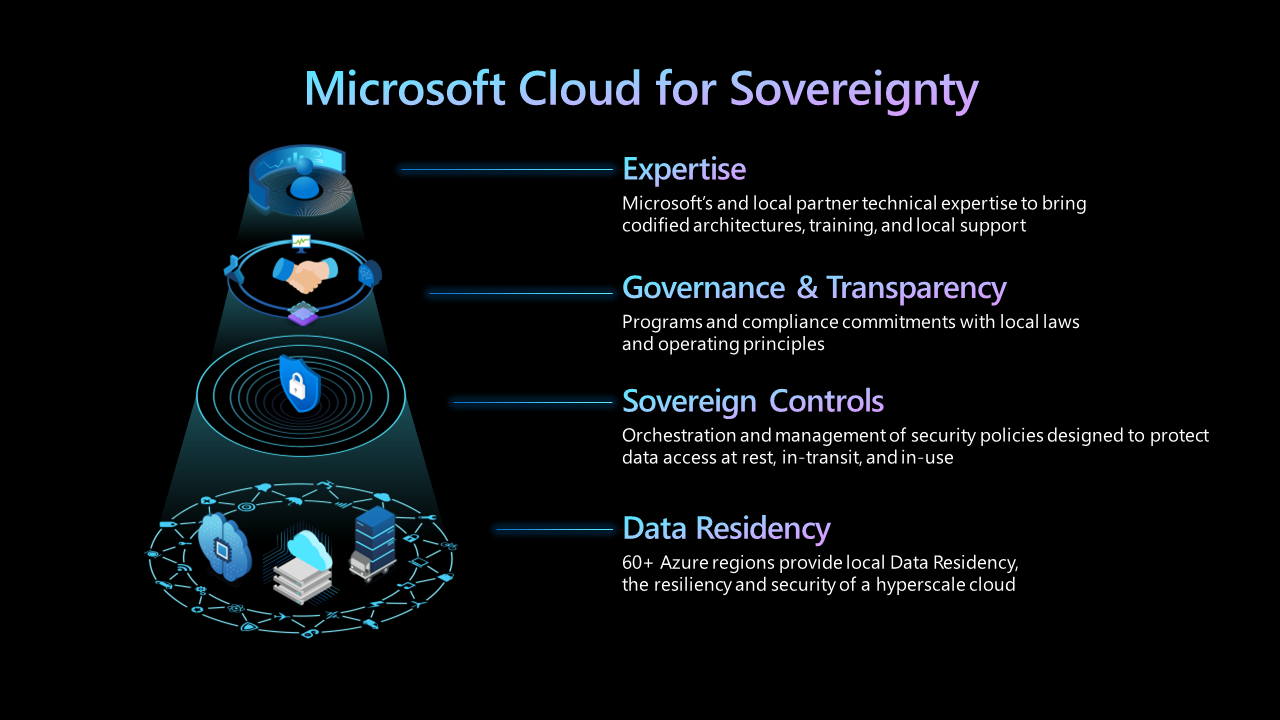
Microsoft has moved too since this article first appeared. Its approach now sits under the Microsoft Sovereign Cloud portfolio. What started as “Cloud for Sovereignty” has become a model with three parts: Sovereign Public Cloud, Sovereign Private Cloud and national partner clouds.
That takes the conversation well past data residency. It now includes who operates the services, how they are governed, how transparent access is, and whether a government can decide how cloud services run within its jurisdiction.
In practice, EU institutions and national governments increasingly ask for proof of control over where data is processed, over privileged access, over incident reporting and over legal enforceability. Behind this is a wider EU policy that treats digital infrastructure as part of strategic autonomy. Where data is stored still matters. So does who can operate, access and support the systems, and which legal safeguards apply. In October 2025 the European Commission brought this together in its Cloud Sovereignty Framework. It sets measurable requirements across eight dimensions and already shapes procurement by EU institutions and member states.
The next step is a legislative proposal. On 3 June 2026 the European Commission published the Cloud and AI Development Act (CADA). It proposes one EU sovereignty framework with four assurance levels, from EU data location at level 1 to full supply chain control without third-country interference at level 4. Public bodies would run a sovereignty risk assessment before they buy cloud and AI services. American hyperscalers can still compete under the proposal. Procurement does the steering: providers are scored on the Union added value they bring, and the top tier is reserved for services owned and operated in the EU. Parliament and Council still have to agree, and adoption is not expected before 2027, so none of this is binding yet. The direction is clear all the same.
AWS and Google Cloud are also adjusting their roadmaps to EU sovereignty demands. If you run a multi-cloud or hybrid strategy, you need to know how their approaches differ.
From Data Location to True Control
The sovereign public model adds safeguards to the Azure regions customers already use, with no migration and no service disruption. By October 2026, most of those safeguards had moved from announcement to rollout. Data Guardian is rolling out for customers in the EU and EFTA. When a Microsoft engineer needs qualifying remote access to in-scope production systems, a trusted EU partner with European-resident staff oversees it. The Production Touch Ledger, also rolling out there in phases, keeps a tamper-evident record of that access and of the actions performed. External key management with Azure Managed HSM is now generally available. Customers keep the root encryption key in hardware they own and operate, on their own premises or with a trusted third party, so the data stays unreadable without their consent.
The single place to see and prove these controls was first announced as Regulated Environment Management. It is now called the Sovereign Control Panel, and Microsoft has scheduled its public preview for Ignite in November 2026. We look at what it can and cannot do yet in a separate article.
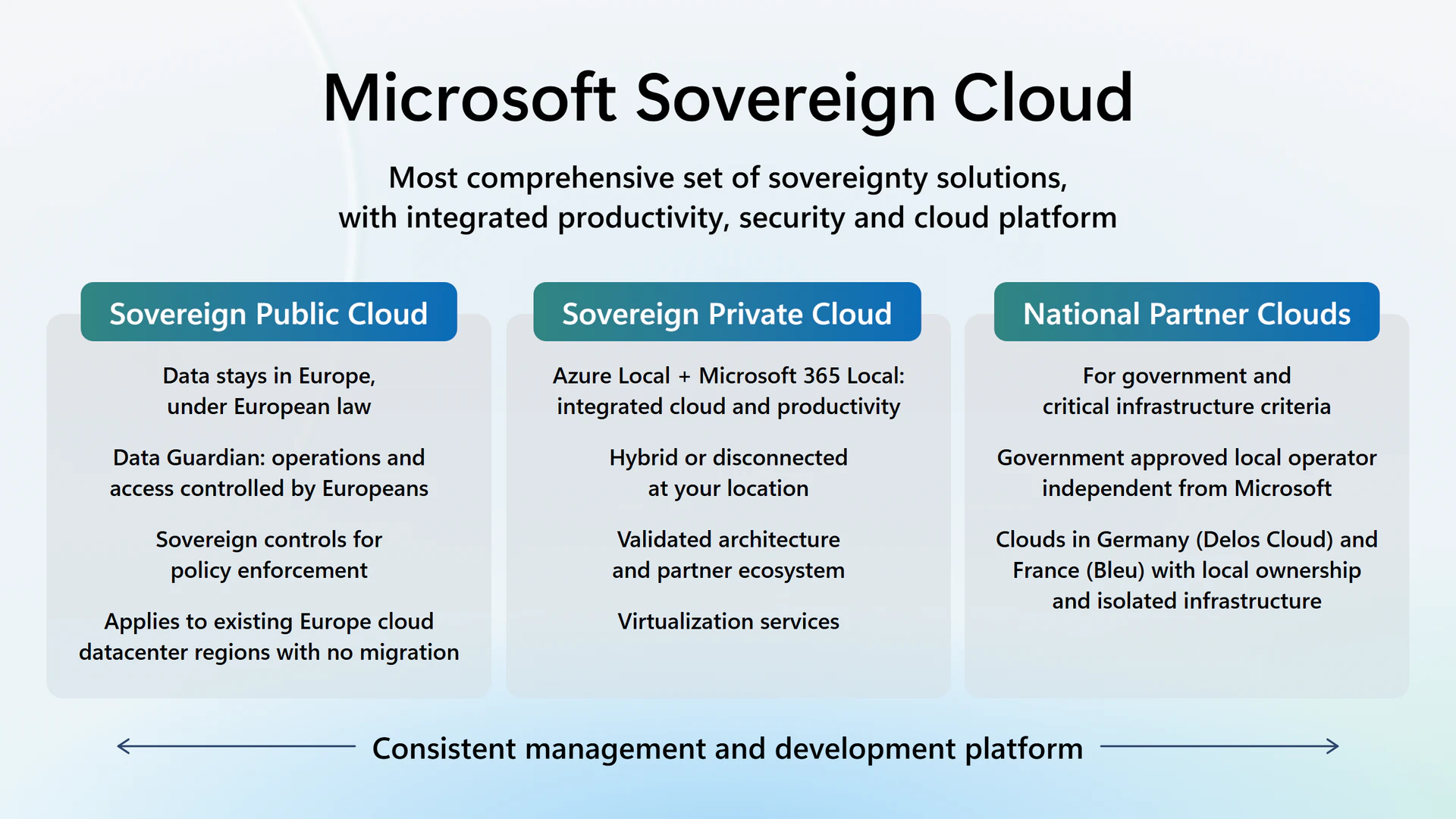
Azure’s sovereignty model has three layers: sovereign public, sovereign private and national partner clouds. European organizations can choose how much sovereignty each workload needs and still use Azure’s global capabilities.
Organizations that need full autonomy can use Azure Local and Microsoft 365 Local. Both run workloads in datacenters controlled by the customer or by trusted European partners. In France and Germany, national operators take this further. Bleu and Delos Cloud run sovereign environments under local law and local governance.
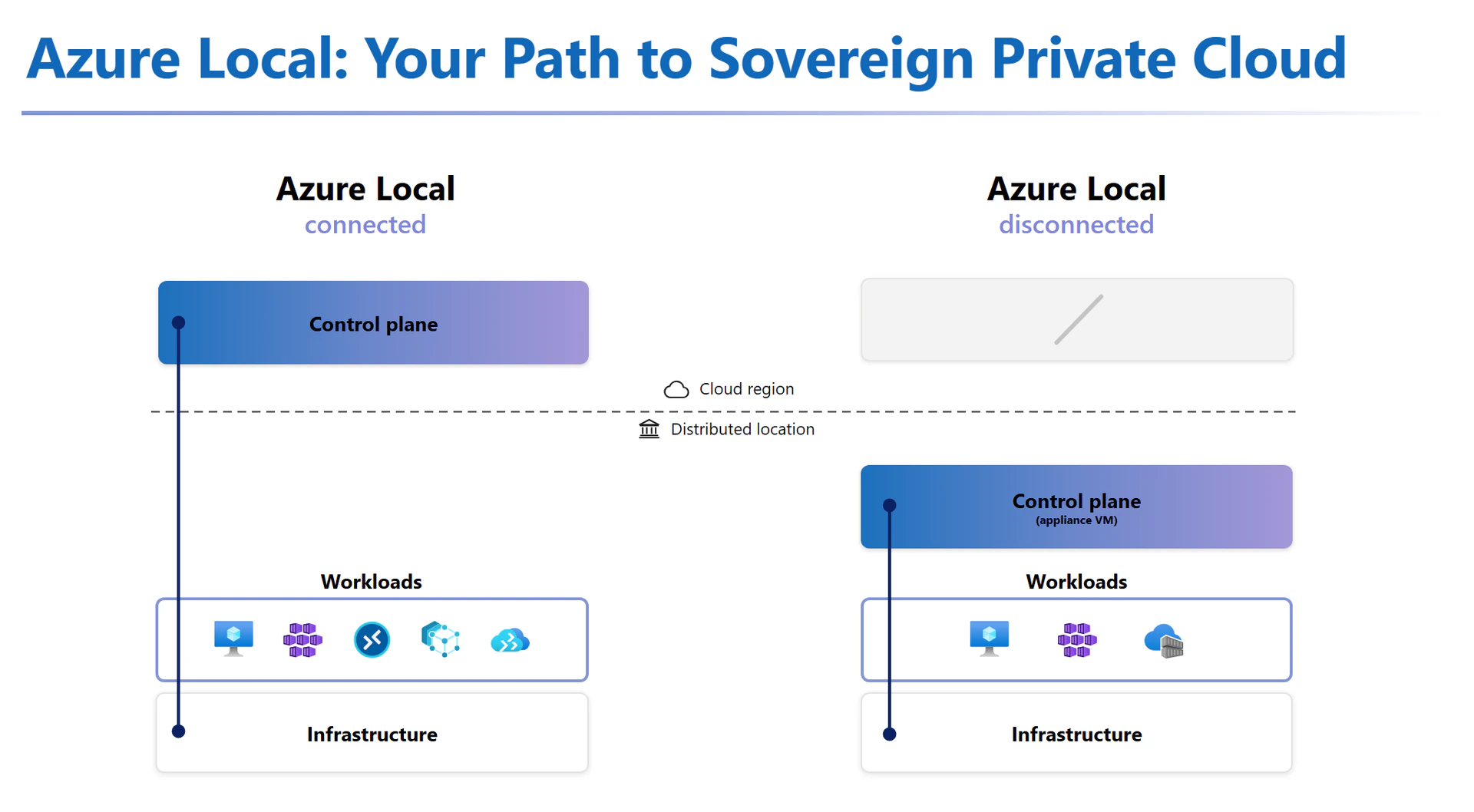
Azure Local runs in hybrid or fully disconnected mode and brings core infrastructure services to the edge. Customers keep full control over the environment, the workloads and the data.
The three parts of the portfolio line up with EU regulatory frameworks and with what member states require. Alongside them, Microsoft keeps extending the EU Data Boundary across Azure and Microsoft 365. That strengthens its commitments on processing in the EU, on the governance of operational access and on the number of services that stay within EU jurisdiction.
In April 2026 Forrester named Microsoft a Leader in The Forrester Wave: Sovereign Cloud Platforms, Q2 2026, together with Google Cloud, AWS, Oracle and Tencent. The report singled out Microsoft’s consistent sovereign controls across public, private and partner-operated environments. Azure Local and Azure Arc keep management, governance and deployment the same, whether a site is connected or disconnected. For European customers the award itself matters less than what it shows: analysts now judge sovereignty as a property of the whole platform.
What European Leaders Should Focus On
Governments in France, Germany, Italy, Spain, the Netherlands and other member states are turning EU strategy into national cloud policy and procurement rules. Each country adds its own reading of sovereignty on top of EU regulation. A public sector organization that chooses a cloud has to satisfy both European law and national political requirements.
Microsoft’s new capabilities strengthen Europe’s position in the cloud market. They give customers real tools to enforce control and transparency, so they do not have to rely on legal promises alone. Some important questions are still open, though.
In the sovereign public cloud, Microsoft still runs the underlying infrastructure and the software updates, so full independence is out of reach. Legal experts point out that U.S. laws such as the CLOUD Act could still cause conflicts, even with external key management in place. Others warn that the extra governance layers add operational complexity for organizations whose security and compliance teams are already stretched.
Forrester makes a point we agree with: sovereignty is something organizations build over time, combining public, private and disconnected environments to fit their regulatory and operational risk. We see the same with our customers. The ones who ask us about sovereignty rarely want a single sovereign region. They want the same governance across the environments they already run.
Even with those concerns, this is a real change. For the first time, European customers can set and enforce boundaries that go further than where their data is stored. Sovereignty becomes something you can put into practice.
The market is moving as well. Gartner expects European spending on sovereign IaaS to nearly double in 2026, to $12.6 billion, a growth of 83%. Sovereignty has become a buying priority.
Europe’s Cloud Identity
Azure’s growing set of sovereign capabilities is part of a wider shift in Europe’s digital identity. Organizations still want to move fast in the cloud. They also want to do it responsibly, under governance that reflects European values.
Sovereignty is becoming a design principle. Organizations that build it into their architecture from the start, balancing innovation with control, will earn more trust from regulators, partners and citizens. Azure’s new sovereign solutions are a step towards a more mature and confident European cloud.
The debate is now driven by legislation, by regulators and by national policy decisions. We will keep updating this article as new EU rules take effect, enforcement matures and the cloud providers respond.
What Governments Evaluate in RFPs and Tenders
If you sell SaaS to the European public sector, sovereignty is already part of the deal. It shows up directly in procurement criteria and contract obligations. Governments increasingly check where data is stored and processed, who can access systems and who approves that access, and whether customers manage their own encryption keys. They also look at how incidents are reported and whether sub-processors expose data to non-EU jurisdictions. Clear exit terms and data portability guarantees are becoming standard requirements. These points now weigh as heavily in award decisions as functionality and price.
From Policy to Platform Design
Across Europe, digital sovereignty now shapes architecture decisions, DevOps practices and cloud governance.
At The Masterminds Group we help organizations set up their Azure environments with Infrastructure as Code, put secure access governance in place, and design cloud platforms that stay transparent, controllable and in line with what regulators expect. Legal interpretation is not our field. What we do is turn regulatory pressure into practical technical design and clear operations.
If your organization works in a regulated market or serves public sector customers, now is a good time to check whether your Azure architecture and DevOps model really meet sovereignty requirements. Contact us, or schedule a direct conversation with DevOps Masterminds CTO Rinie Huijgen.