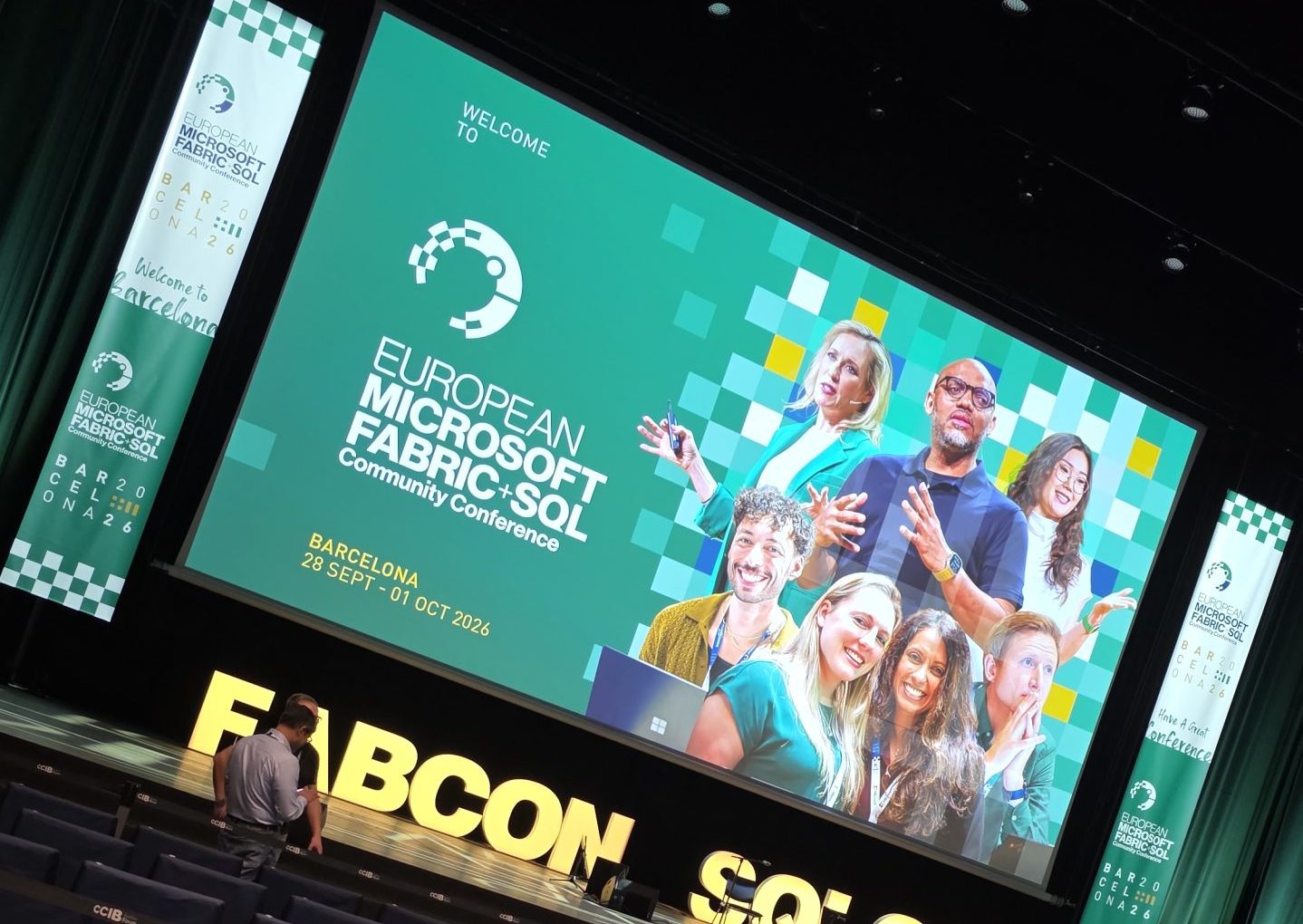
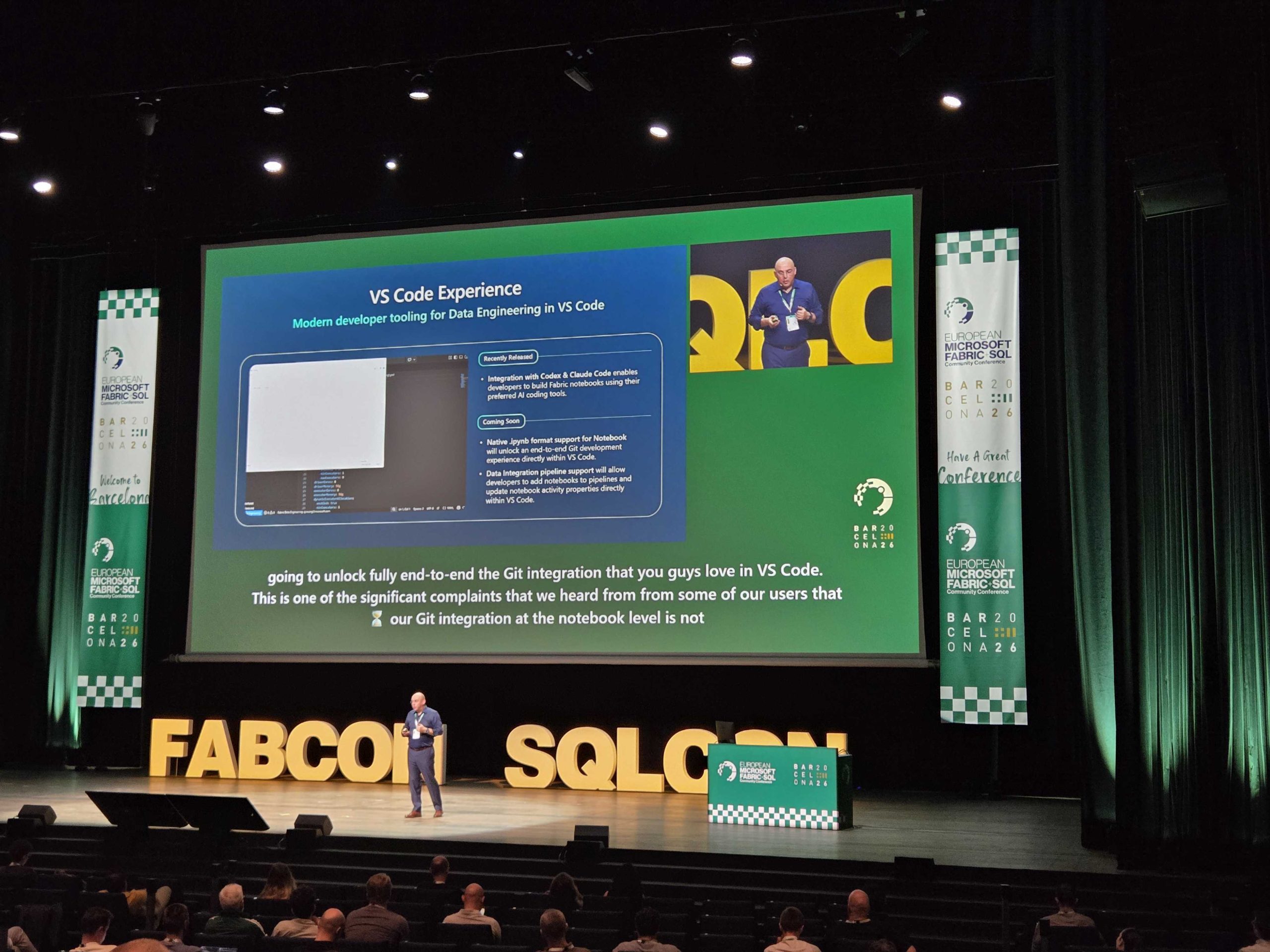

The European Microsoft Fabric + SQL Community Conference 2026, better known as FabCon + SQLCon Europe, took place from Monday 28 September to Thursday 1 October at the CCIB in Barcelona. A group of us from the Masterminds Group were there, attending and delivering sessions.
I joined Analytics Masterminds as a Data Engineer in August, and this was my first ever conference. I travelled to Barcelona without really knowing what to expect, and this blog is a short summary of what I learned and which sessions I found most interesting.
My colleague Claudio Silva has already written about the SQL side of the conference in My notes from FabCon + SQLCon Barcelona, so this post focuses on the Fabric sessions I attended.
My first FabCon: what I expected and what I found
Before the conference, I had no real frame of reference. I did not know how technical the sessions would be, how much would be product announcements, or how much would be practical advice. What I found was a good mix of all three. I deliberately chose most of my sessions around one theme: working with Microsoft Fabric as efficiently as possible. That meant looking at cost, compute and performance rather than only at new features.
Project Osmos: an AI-driven data engineering agent in Microsoft Fabric
The opening keynote announced a lot of new features and improvements across Fabric. The one that stood out most to me was Project Osmos, an AI-driven data engineering agent in Fabric. The idea is that the agent has all the context you need to perform almost any task in Fabric.
As a data engineer, that is a big claim, and it is the reason I kept thinking about it after the keynote. Working in Fabric means working across many items and settings, and context is usually what takes the time. An agent that already has that context could change how everyday data engineering work gets done. It is still early, and I am curious to see how it holds up on real projects, but it is the announcement I will follow most closely.
The sessions I found most interesting as a Data Engineer
Here are some notes on the sessions I attended.
The Ultimate Decision Guide: Capacity Strategies to Optimise Cost and Compute, by Frederik Declerck
This session gave us a decision guide for choosing and optimising Fabric capacities for both cost and compute. What I found most interesting is that Frederik managed to explain every single variable that influences the decision on which type of capacity to use. He also used t-shirt sizes as a metaphor, which made the options easy to compare.
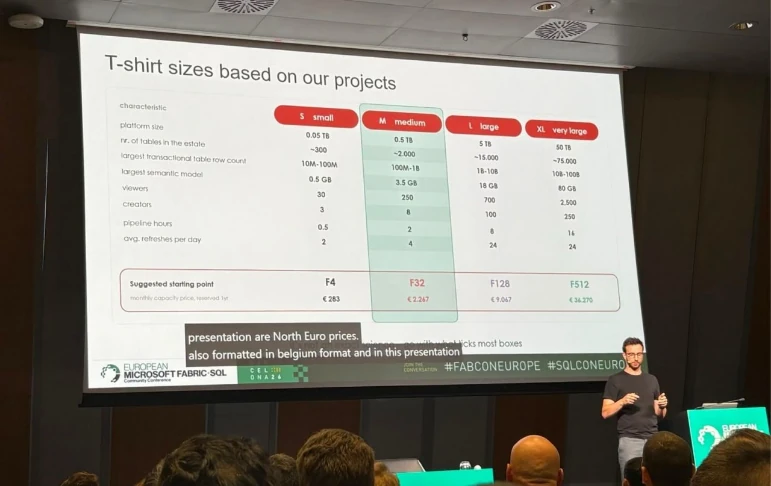
Capacity choices can easily feel like educated guesses. Seeing every variable laid out turns the decision into a structured process. Cost and compute come up in almost every Fabric conversation, so this is a guide I expect to use in practice.
Crafting a Personal Brand: Your Career Deserves More Than Just a CV, by Isi Turner
Not every session was technical. Isi Turner spoke about improving your CV, building your own personal brand, and how to approach posting on LinkedIn, with practical tips throughout. As someone who has just joined a new company and was at my first conference, I found this a useful reminder that sharing what you learn is part of building a career in data, and a session like this makes it feel more approachable.
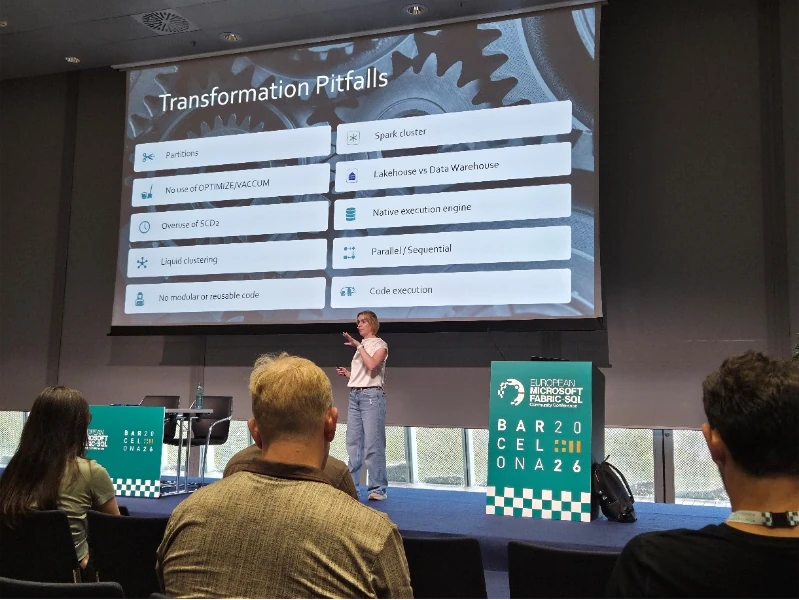
Microsoft Fabric Performance Pitfalls and How to Avoid Them, by Linda Torrång
My last session was given by my colleague Linda Torrång, who explained the most common performance pitfalls in Fabric and how to avoid them. Performance is closely connected to the cost topic from Frederik’s session, because an inefficient data platform uses more compute, whichever capacity you choose. It was also great to see a colleague on stage at an event of this size.
What I am taking away from FabCon + SQLCon Europe 2026
- Fabric is moving quickly. AI agents such as Project Osmos are likely to become part of the data engineering workflow.
- Cost and performance are design decisions. Choosing the right capacity and avoiding known performance pitfalls is easier when you plan for it from the start.
- A first conference is worth it. I arrived unsure what to expect and left with new ideas and a clearer view of where Fabric is heading.
Missed it? Join us in 2027
If you were not at this year’s conference and want to be at the next one, save the date. FabCon + SQLCon Europe 2027 takes place in Amsterdam from 25 to 28 October 2027, and the Masterminds team will be there.
What’s next?
If you have questions about Microsoft Fabric, your capacity setup, or any other data platform topic, we meet you where you are, and together we can improve your systems. Get in touch.
You can also take a look at our Analytics Health Check. It helps you align your current setup with best practices and avoid the performance pitfalls Linda talked about.