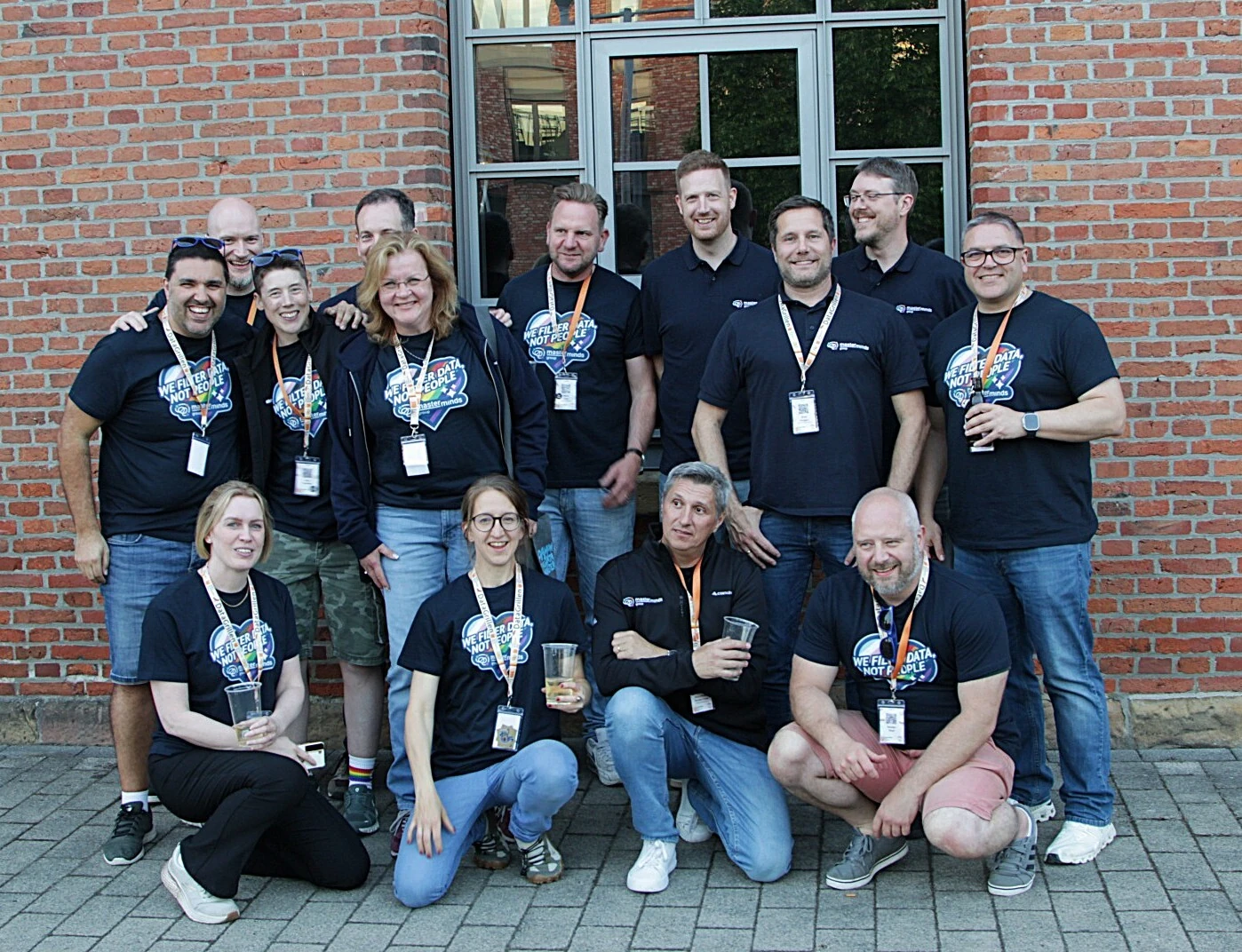


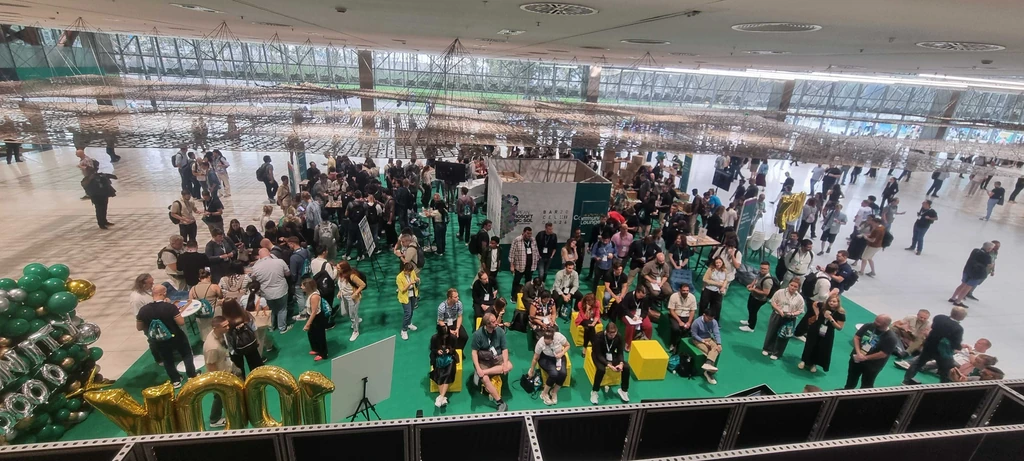
European Microsoft Fabric + SQL Community Conference 2026 happened between Monday the 28th and Thursday, October 1st, and a couple of us from the Masterminds Group were there attending and delivering presentations.
The announcements
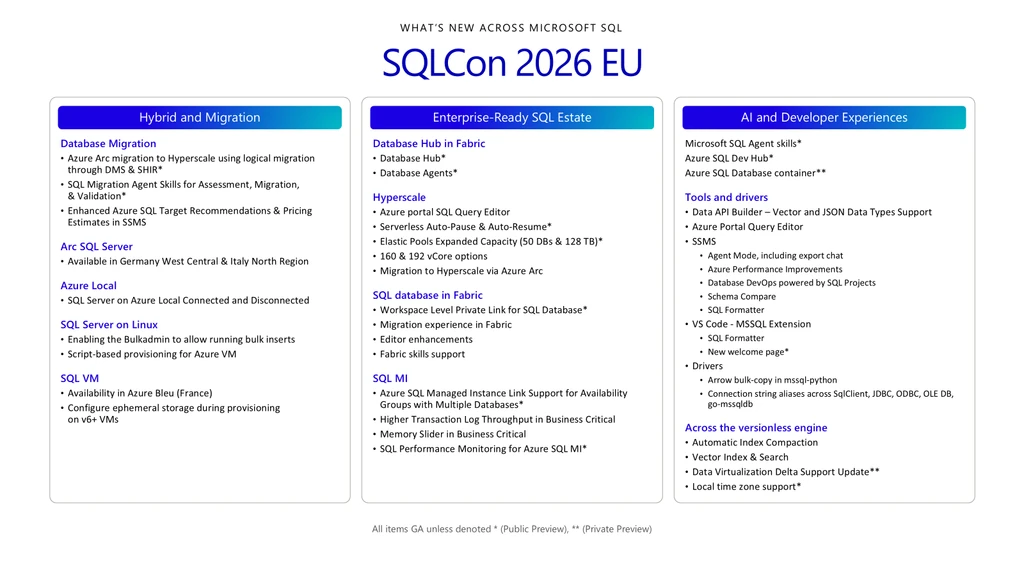
During the keynote, there were plenty of announcements of features that reached GA (Generally Available). That’s significant because it means that a feature is fully released, stable, and officially supported for production use.
In case you missed it - The Masterminds team post some comments along the way about those features as they were being announced on our LinkedIn page.
Here is a summary from the Microsoft presentation:
“Which features were you excited to see going GA?”
As a performance tuner / DBA, the features I’m most excited about, have already tested, and that work great are:
1. Vector indexes (DiskANN)
In the first version, vector indexes would make your tables read-only, which brings challenges keeping your data/embeddings up to date. With the newer version, that is no longer the case! It also brings some other improvements!
Either if you tested with this feature in the earlier version, or wanted to explore it more, I encourage you to revisit it/give it a new spin.
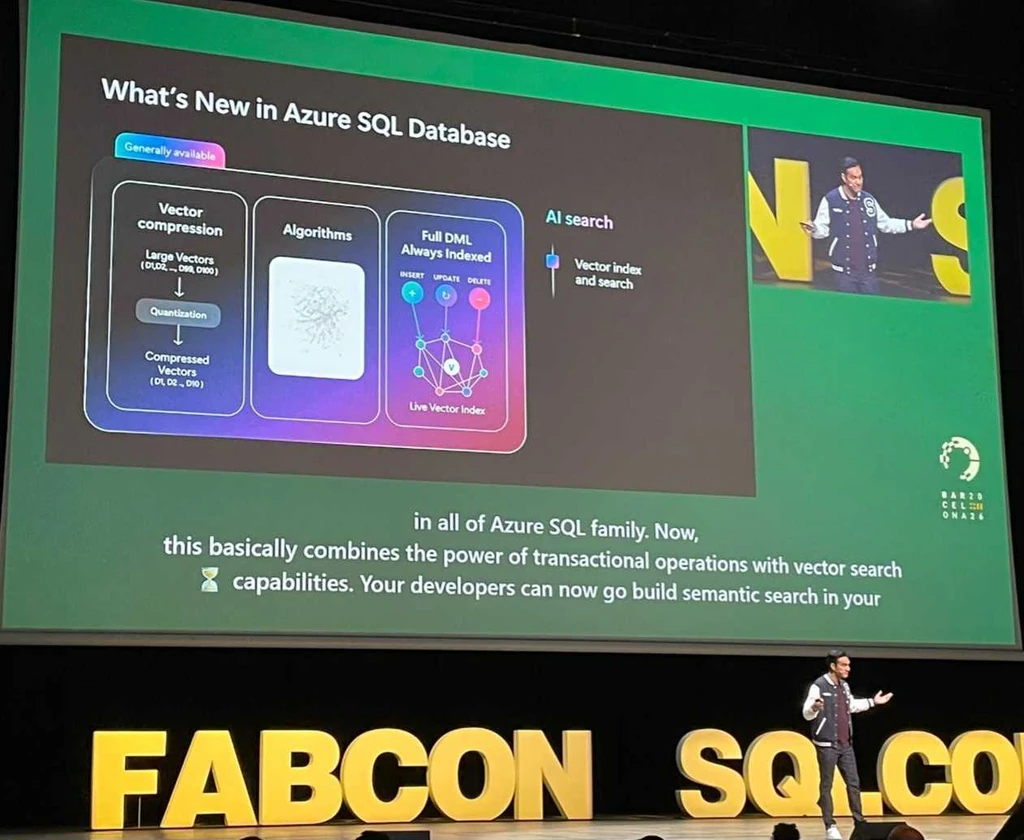
For now, this is just an Azure SQL feature (on premesis/box product we just have the 1st version of it).
2. Automatic Index Compaction (AIC)
While I don’t think this is, yet(!), the 100% end of index maintenance activities as we know them, I’m sure for the majority of the regular transactional workloads this is a big win!
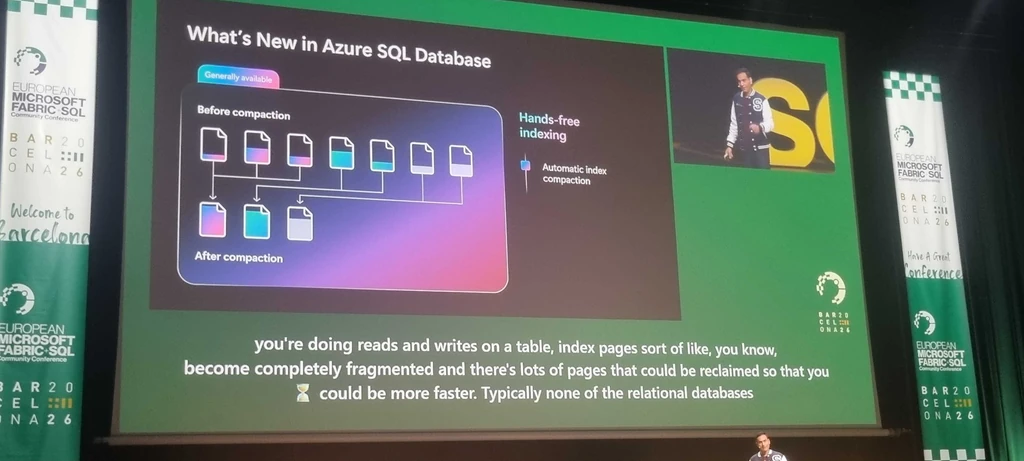
Since this is currently just an Azure SQL feature, I would love to have this in the on-premises box product version! Hopefully we can get it soon!
3. Tools
On the tools side, among others, SQL Projects and Schema Compare in SSMS are now GA, too!
Also, the newcomer (in SSMS), SQL Formatter, is generally available. Same for the feature in the MSSQL extension for VS Code.
My Session Plan for the week:
I had some session selections done before the conference and a couple of others that I decided to go with the flow.
Here are some comments/notes on some of the sessions that I attended.
CORENOTE: The Roadmap for Microsoft SQL: Ground to Cloud to Fabric
This session was delivered by Microsoft folks, and it was all about the different flavours of SQL Server. The latest features, what’s new and what is on the roadmap!
Yes! We now have a public roadmap.
NOTE: Be aware that all these things will appear most probably first on Azure SQL flavours and in a later stage on the vNEXT box product version.
Azure SQL Database vs. SQL Database in Fabric: Key Differences for Developers and DBAs
In this session, John did a great job explaining the differences between these two flavours! The key takeaway is that SQL Database in Fabric isn’t HA/DR ready. If a region goes down, you won’t be able to easily get back to business!
There are a couple of other nuances you can check in the slides here.
From Prompt to Production: Building Governed Apps on Fabric with Rayfin
This is a Fabric session delivered by Microsoft.
If you haven’t heard about Rayfin, it is an open-source Command Line Interface (CLI) and Software Development Kit (SDK) developed by Microsoft.
Instead of manually provisioning separate servers, databases, API gateways, and authentication layers, Rayfin allows you to define your application’s data models and business logic using TypeScript. It then automates the entire cloud infrastructure setup by leveraging the data analytics, storage, and compute resources already available within your Microsoft Fabric workspace.
It was interesting to see it in action.
SQL Injection in 2026: Live Exploitation, Modern Risks, and Practical Defenses
Security is always a hot topic. With recent releases of SQL Server CU (Cumulative Updates), a good number of CVEs were addressed.
In this session, the presenters brought AI into the plan and showed how, if you don’t have good guardrails, you can do some nasty things.
Depending on the LLM you are using and the creativity of your requests, you can still do some harm!
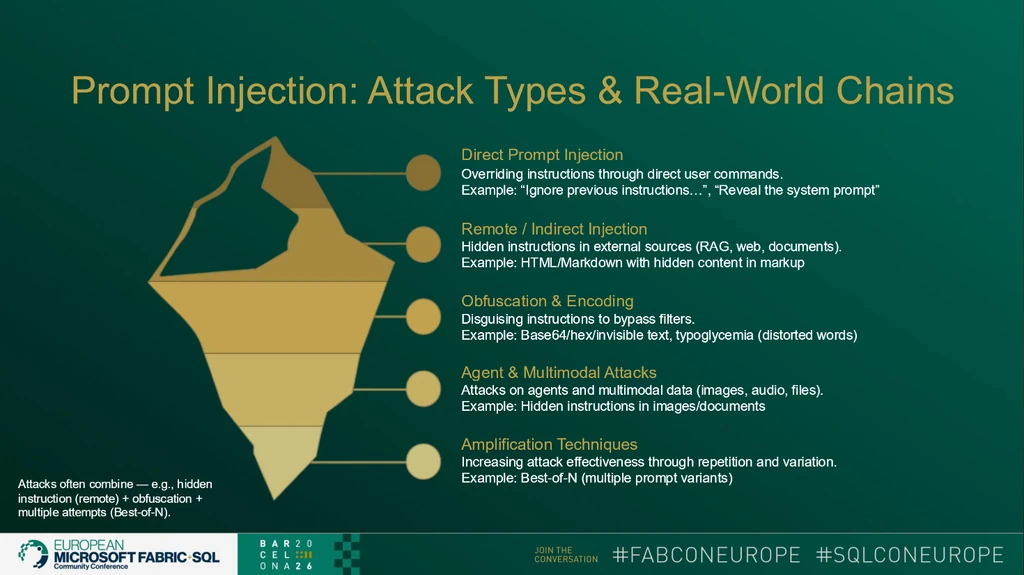
Credits: Mariusz Wójcik & Piotr Balik
Database Agents: A New Way to Manage Databases in Fabric
I heard about this feature a couple of times before, but haven’t seen it live.
The idea is an “agent-assisted, human-in-the-loop” approach.
Intelligent agents continuously reason over estate-wide signals to surface what changed, explain why it matters, and guide teams toward what to do next, while built-in observability, delegated governance, and Copilot-powered insights help teams move from insight to action with greater confidence.
It is indeed interesting, and over time it will become more and more useful. Patrick and Makena showed the current available configuration level, such as which types of problems (examples: deadlocks, long-running transactions, high CPU consumption, etc.) you want to be notified about. But you can also ask ad hoc questions and get feedback. All unified in the Database Hub in Microsoft Fabric.
Exploring Optimized Locking in SQL Server 2025
Maybe you haven’t heard about this feature, but it’s been on Azure SQL for a long time now (+1 year), and it’s also on the box product with SQL Server 2025.
John and Monica explained how this works and why it can be a game changer for your workload. Less blocking, fewer resources needed in general, which can lead to better performance.
Missed it? Join us there in 2027
If you weren’t aware of this conference and you want to be present at the next one, save the date!
Next year’s Microsoft Fabric and SQL Conference - ESPC will happen in Amsterdam (Netherlands) between the 25th and 28th Oct 2027, and the Masterminds team will be there!
What’s Next?
If you have questions about all of these exciting announcements, whether they can help you, or any other data platform questions, we meet you where you are, and together we can improve your systems. Get in touch
Also check out our SQL Server and Analytics Health Checks - they help you align what you’ve currently got to best practices and avoid those performance pitfalls.